SLEEP MEDICINE

What Is Sleep Medicine?

Baseline Polysomnography
It is a study that simultaneously records variables such as brain activity, respiratory rate, and heart rate to diagnose sleep disorders in children and adults, including parasomnias, sleep apnea, and snoring.
CPAP and BPAP Titration Studies
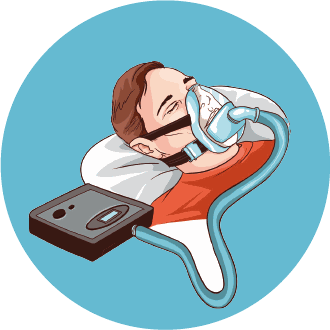
Polysomnography is recommended for the management of obstructive sleep apnea and hypopnea syndrome, ensuring accurate titration through advanced technology and specialized staff.

Capnography
It is the measurement of carbon dioxide (CO₂) in a patient’s airway during the respiratory cycle, specifically the measurement of the partial pressure of CO₂ in exhaled air.
Multiple Sleep Latency Test
This study is recommended to evaluate excessive daytime sleepiness and to rule out the presence of narcolepsy. The patient undergoes a prior assessment before the test to ensure better adaptation and more accurate results.


Number 1
Sleep disorders encompass conditions of diverse origins, with clinical manifestations as varied as insomnia, hypersomnia, respiratory disorders, complex motor disturbances, among others.

Number 2
During sleep consultations, key aspects are identified and addressed as part of the diagnostic and treatment process.

Number 3
Various tests performed in the sleep units are reviewed, analyzed, and interpreted, including polysomnography, the Multiple Sleep Latency Test (MSLT), and sleep video EEG.
 ARMENIA